Condition
Onchocerciasis (river blindness)
Medical reviewer Mr Mohamed Mohyudin, Consultant Ophthalmic SurgeonArticle reviewed
About this review
The reviewer checked the version identified in this article’s review record.
Onchocerciasis (river blindness) at a glance
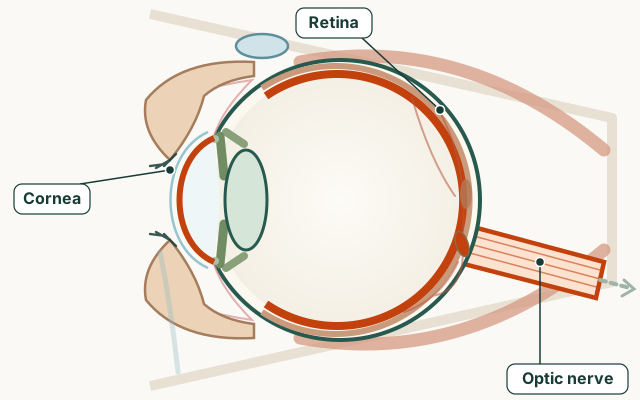
- Part of the eye
- Cornea, retina and optic nerve
- Common signs
- Intense itching and skin nodules
- Thickened or leopard-spot skin
- Eye redness, pain and light sensitivity
- Progressive vision loss and blindness in untreated cases
- Treatment options
- Condition group
- Retina and optic nerve
- Medical code (ICD-10)
B73
What is onchocerciasis (river blindness)?
Onchocerciasis is caused by the worm Onchocerca volvulus, transmitted by repeated black fly bites. Microfilariae migrate through skin and eyes, causing inflammation that can damage the cornea and optic nerve over years.
Symptoms of onchocerciasis
Symptoms build over years of exposure in endemic communities.
- Intense itching and skin nodules
- Thickened or leopard-spot skin
- Eye redness, pain and light sensitivity
- Progressive vision loss and blindness in untreated cases
WHO prevention and control
WHO and partners run community treatment with ivermectin (Mectizan) to kill microfilariae and prevent transmission. Vector control near rivers also helps. The goal is elimination as a public health problem in affected countries.
Relevance elsewhere
River blindness is rare in high-income countries. Travellers to endemic areas for long periods may need awareness, but tourist visits are very low risk. It illustrates why global eye health programmes matter alongside everyday conditions elsewhere.
Treatments & Surgery
Frequently asked questions
Is onchocerciasis still a cause of blindness?
Yes in some endemic regions, though WHO-led mass drug administration has dramatically reduced new blindness in many African countries.
How is river blindness prevented?
Community treatment with ivermectin and fly control near rivers are the main WHO-backed strategies, repeated until transmission stops.
Can onchocerciasis be treated?
Ivermectin kills microfilariae and reduces progression, but established eye scarring may be permanent, which is why prevention programmes focus on early community treatment.
Sources for this information
These references support the information on this page. Follow the linked source for its full context.