Condition
Subconjunctival haemorrhage (red patch on the eye)
Medical reviewer Mr Mohamed Mohyudin, Consultant Ophthalmic SurgeonArticle reviewed
About this review
The reviewer checked the version identified in this article’s review record.
Subconjunctival haemorrhage at a glance
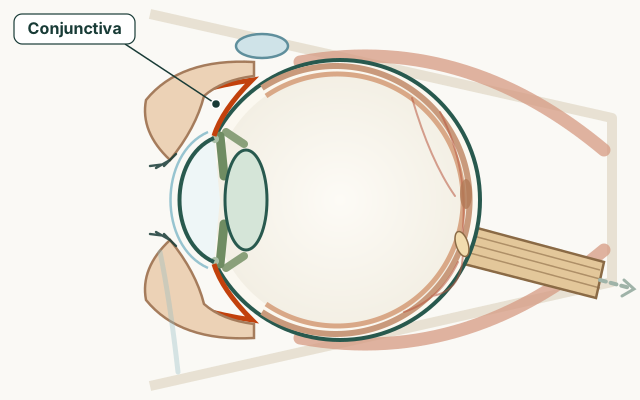
- Part of the eye
- Conjunctiva
- Common signs
- A bright red, flat patch on the white of the eye
- No pain or only mild awareness
- No change in vision
- Sometimes a mild scratchy feeling
- Condition group
- Cornea and front of eye
- Medical code (ICD-10)
H11.3
What is a subconjunctival haemorrhage?
A subconjunctival haemorrhage happens when a small blood vessel just under the clear surface of the eye breaks, releasing blood that spreads into a flat red patch. It is common, usually harmless, and does not affect your vision.
Symptoms of a subconjunctival haemorrhage
There is usually little more than the appearance of the red patch.
- A bright red, flat patch on the white of the eye
- No pain or only mild awareness
- No change in vision
- Sometimes a mild scratchy feeling
What causes a subconjunctival haemorrhage, and who is at risk?
It can follow coughing, sneezing, straining, vomiting, or rubbing the eye, and sometimes a minor injury. It is more common with age, with high blood pressure, or when taking blood-thinning medicines. Often no clear cause is found.
When to get medical advice about a subconjunctival haemorrhage
Most need no treatment and clear within two weeks, gradually fading like a bruise. See a clinician if there is pain, changes in vision, it follows a significant eye injury, it keeps coming back, or it appears alongside easy bruising or bleeding elsewhere.
Frequently asked questions
Is a subconjunctival haemorrhage dangerous?
It usually looks far worse than it is and is typically harmless, clearing on its own. Seek advice if it is painful, affects your vision, or follows an injury.
How long does the red patch take to clear?
It usually fades over one to two weeks, changing colour like a bruise as it heals, and needs no treatment.
What if it keeps happening?
Recurrent subconjunctival haemorrhages are worth discussing with a clinician, who may check your blood pressure or review any blood-thinning medicines.
Sources for this information
These references support the information on this page. Follow the linked source for its full context.