Condition
Short-sightedness (myopia)
Medical reviewer Mr Mohamed Mohyudin, Consultant Ophthalmic SurgeonArticle reviewed
About this review
The reviewer checked the version identified in this article’s review record.
Short-sightedness at a glance
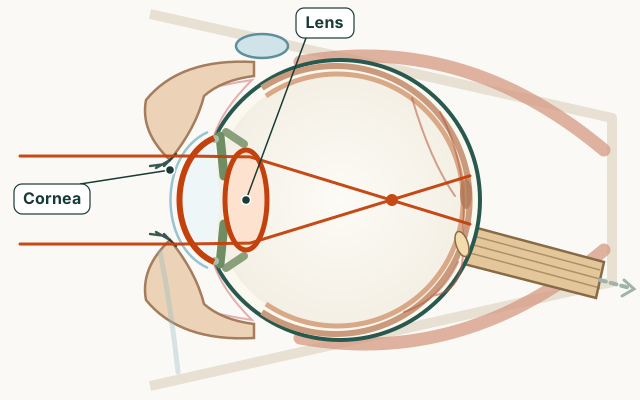
- Part of the eye
- Cornea and lens
- Common signs
- Difficulty seeing distant objects such as road signs or the board
- Screwing up the eyes or squinting to see far away
- Headaches or tired eyes
- Children sitting close to the screen or struggling at school
- Treatment options
- Condition group
- Cornea and front of eye
- Medical code (ICD-10)
H52.1
What is short-sightedness (myopia)?
Short-sightedness, or myopia, happens when the eye focuses light just in front of the retina instead of on it, usually because the eyeball is slightly too long or the cornea is too curved. It often starts in childhood and can progress as a child grows.
Symptoms of short-sightedness
Signs are often noticed at school or while driving.
- Difficulty seeing distant objects such as road signs or the board
- Screwing up the eyes or squinting to see far away
- Headaches or tired eyes
- Children sitting close to the screen or struggling at school
What causes short-sightedness, and who is at risk?
Short-sightedness tends to run in families. In children, a lot of close-up work and limited time outdoors may contribute to it developing or progressing.
How is short-sightedness treated?
Glasses or contact lenses correct the focus for clear distance vision. Laser or lens-based refractive surgery is an option for suitable adults. In children, specific approaches known as myopia management may help slow how quickly it progresses.
Treatments & Surgery
Frequently asked questions
Can short-sightedness be cured?
It is corrected rather than cured. Glasses and contact lenses give clear vision, and laser surgery can be an option for suitable adults.
Does screen time cause short-sightedness?
A lot of close-up work and less time outdoors may contribute in children. Encouraging regular outdoor time is thought to help reduce the risk.
Will my short-sightedness get worse?
Myopia often progresses during childhood and the teenage years, then tends to stabilise in adulthood. Regular eye tests keep your correction up to date.
Sources for this information
These references support the information on this page. Follow the linked source for its full context.