Condition
Retinitis pigmentosa
Medical reviewer Mr Mohamed Mohyudin, Consultant Ophthalmic SurgeonArticle reviewed
About this review
The reviewer checked the version identified in this article’s review record.
Retinitis pigmentosa at a glance
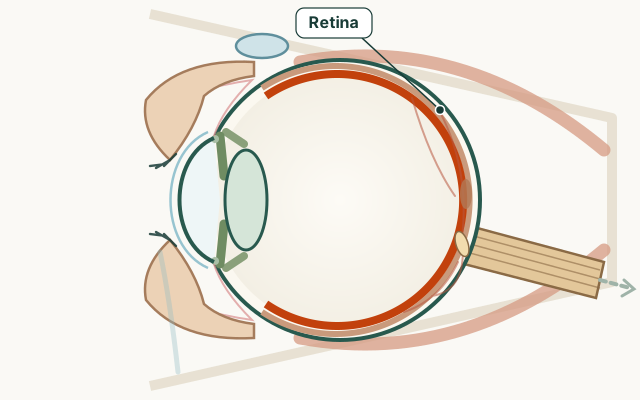
- Part of the eye
- Retina
- Common signs
- Difficulty seeing in dim light or at night
- Gradual loss of side (peripheral) vision, sometimes described as tunnel vision
- Difficulty adjusting between bright and dark places
- In later stages, reduced central or colour vision
- Condition group
- Retina and optic nerve
- Medical code (ICD-10)
H35.5
What is retinitis pigmentosa?
Retinitis pigmentosa (RP) describes a group of inherited conditions that cause the light-sensitive cells in the retina to break down over time. It is relatively rare and usually affects both eyes, with vision changing slowly over many years.
Symptoms of retinitis pigmentosa
Symptoms often begin in childhood or early adulthood and progress gradually.
- Difficulty seeing in dim light or at night
- Gradual loss of side (peripheral) vision, sometimes described as tunnel vision
- Difficulty adjusting between bright and dark places
- In later stages, reduced central or colour vision
What causes retinitis pigmentosa, and who is at risk?
Retinitis pigmentosa is caused by inherited changes in genes that keep the retina healthy. It can run in families in different patterns, and a family history is the main risk factor. Genetic testing can sometimes identify the specific cause.
Living with it and support
There is no cure for most forms of RP, but support makes a real difference: low-vision aids, lighting and mobility strategies, and registering with sight-support services. Genetic counselling can help families, and treatments are emerging for some specific genetic types, so specialist follow-up is valuable.
Frequently asked questions
Does retinitis pigmentosa cause complete blindness?
RP usually causes gradual loss of night and side vision, and many people keep some useful central vision for a long time. The degree of vision loss varies between people and genetic types.
Is retinitis pigmentosa inherited?
Yes. RP is caused by inherited gene changes and can run in families. Genetic counselling and testing can help families understand the pattern and risk.
Is there a treatment for retinitis pigmentosa?
There is no cure for most types, but low-vision support helps daily life, and treatments are emerging for certain specific genetic forms, so specialist follow-up is worthwhile.
Sources for this information
These references support the information on this page. Follow the linked source for its full context.