Condition
Colour blindness (colour vision deficiency)
Medical reviewer Mr Mohamed Mohyudin, Consultant Ophthalmic SurgeonArticle reviewed
About this review
The reviewer checked the version identified in this article’s review record.
Colour blindness at a glance
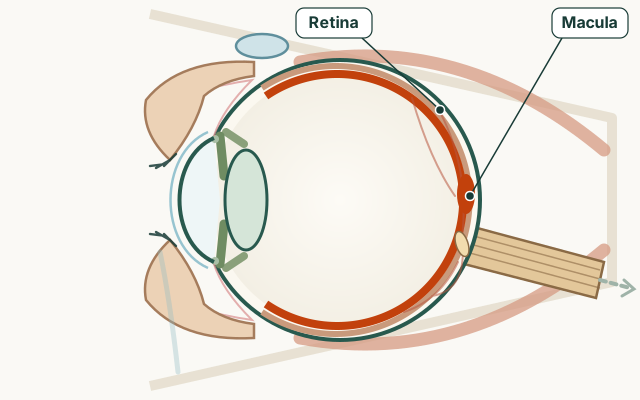
- Part of the eye
- Retina and macula
- Common signs
- Difficulty telling reds and greens apart
- Less often, trouble distinguishing blues and yellows
- Confusing colour-coded information such as charts or wiring
- Finding some colours look dull or similar
- Condition group
- Retina and optic nerve
- Medical code (ICD-10)
H53.5
What is colour blindness?
Colour blindness means the colour-sensing cells in the eye do not work in the usual way, so some colours look similar or washed out. Most people with it can see colours, but find it hard to tell certain ones apart, especially reds and greens.
Symptoms of colour blindness
Many people adapt and may not realise they see colours differently.
- Difficulty telling reds and greens apart
- Less often, trouble distinguishing blues and yellows
- Confusing colour-coded information such as charts or wiring
- Finding some colours look dull or similar
What causes colour blindness, and who is at risk?
Most colour blindness is inherited and present from birth, and it is far more common in men. Less commonly it can be acquired later from eye conditions, some medicines, diabetes, or ageing.
Living with it and support
There is no cure for inherited colour blindness, but most people adapt well. Good lighting, labelling, and apps that identify colours help with daily tasks, and some people find special tinted lenses useful. An optometrist can confirm the type with simple colour vision tests.
Frequently asked questions
Can colour blindness be cured?
Inherited colour blindness cannot be cured, but most people adapt well, and aids such as labelling, apps, and sometimes special lenses can help with daily tasks.
Why is colour blindness more common in men?
The most common types are linked to the X chromosome, so men, who have one X chromosome, are much more likely to be affected than women.
How is colour blindness diagnosed?
An optometrist can diagnose it with simple colour vision tests, such as patterns of coloured dots, often as part of a routine eye examination.
Sources for this information
These references support the information on this page. Follow the linked source for its full context.