Condition
Thyroid eye disease (Graves' eye disease)
Medical reviewer Mr Mohamed Mohyudin, Consultant Ophthalmic SurgeonArticle reviewed
About this review
The reviewer checked the version identified in this article’s review record.
Thyroid eye disease at a glance
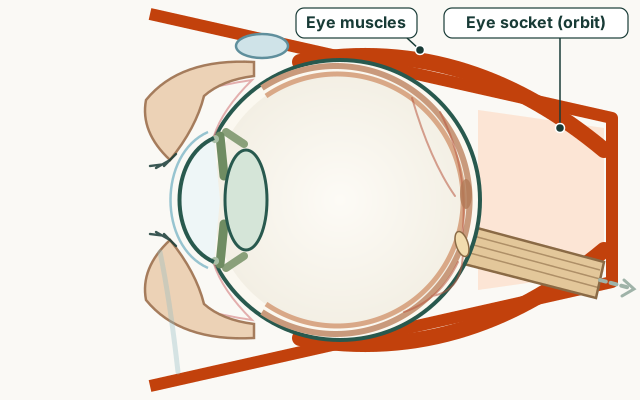
- Part of the eye
- Eye muscles and eye socket (orbit)
- Common signs
- Bulging or staring-looking eyes (proptosis)
- Dry, gritty, red or watery eyes
- Swollen, puffy eyelids and a retracted upper lid
- Double vision, and rarely reduced vision in severe cases
- Treatment options
- Condition group
- Eyelid conditions
- Medical code (ICD-10)
H06.2
What is thyroid eye disease?
Thyroid eye disease, also called Graves' orbitopathy, is an autoimmune condition where the immune system inflames the muscles and fat behind the eyes. It is most often associated with an overactive thyroid but can occur with normal or underactive thyroid function too.
Symptoms of thyroid eye disease
Symptoms can affect appearance, comfort and vision.
- Bulging or staring-looking eyes (proptosis)
- Dry, gritty, red or watery eyes
- Swollen, puffy eyelids and a retracted upper lid
- Double vision, and rarely reduced vision in severe cases
What causes thyroid eye disease, and who is at risk?
It is an autoimmune process most often linked to Graves' disease. The single most important risk factor that can be changed is smoking, which makes the disease more likely and more severe. It is also more common in women.
How is thyroid eye disease treated?
Management is shared between thyroid specialists and eye specialists. Stopping smoking is vital, as is getting thyroid levels under control. Lubricating drops ease dryness, while active inflammation may need anti-inflammatory treatment, and surgery can later correct bulging, lid position or double vision. Sudden loss of vision or colour vision needs urgent care.
Treatments & Surgery
Frequently asked questions
What causes thyroid eye disease?
It is an autoimmune condition, usually linked to Graves' disease and an overactive thyroid. The immune system inflames the tissues around the eyes, and smoking is the biggest modifiable risk factor.
Does treating my thyroid cure the eye disease?
Controlling thyroid levels and stopping smoking help, but the eye disease can follow its own course and often needs separate eye care, including lubricants, anti-inflammatory treatment, or surgery.
Is thyroid eye disease serious?
Most cases are mild to moderate, but a small number threaten sight through pressure on the optic nerve. Any sudden drop in vision or colour vision needs urgent specialist care.
Sources for this information
These references support the information on this page. Follow the linked source for its full context.