Condition
Pinguecula
Medical reviewer Mr Mohamed Mohyudin, Consultant Ophthalmic SurgeonArticle reviewed
About this review
The reviewer checked the version identified in this article’s review record.
Pinguecula at a glance
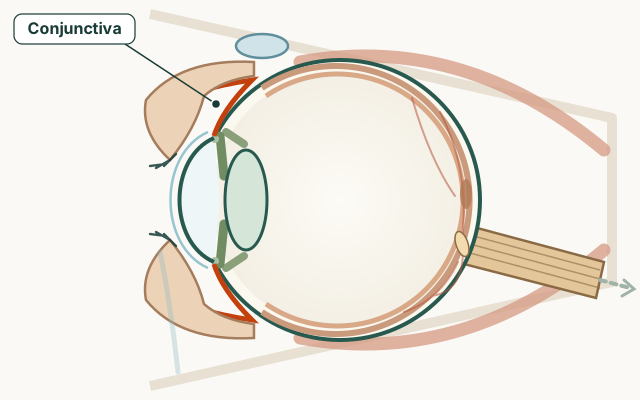
- Part of the eye
- Conjunctiva
- Common signs
- A small yellowish raised bump on the white of the eye
- Sometimes redness or irritation, especially in dry or dusty conditions
- A dry or gritty feeling
- No effect on vision
- Condition group
- Cornea and front of eye
- Medical code (ICD-10)
H11.1
What is a pinguecula?
A pinguecula is a raised, yellowish deposit on the conjunctiva, the clear surface over the white of the eye. It is very common, harmless, and does not grow onto the cornea, which is what sets it apart from a pterygium.
Symptoms of a pinguecula
Many pingueculae cause few symptoms beyond their appearance.
- A small yellowish raised bump on the white of the eye
- Sometimes redness or irritation, especially in dry or dusty conditions
- A dry or gritty feeling
- No effect on vision
What causes a pinguecula, and who is at risk?
A pinguecula is linked to long-term exposure to ultraviolet (UV) light, wind and dust. It becomes more common with age and in people who spend a lot of time outdoors.
Treatment and self-care for a pinguecula
No treatment is usually needed. Lubricating drops ease dryness and irritation, and protecting your eyes from UV light with wraparound sunglasses helps. If a pinguecula becomes very red or inflamed, a clinician can advise on short-term treatment.
Frequently asked questions
Is a pinguecula harmful?
No, a pinguecula is harmless and does not usually affect vision. It is not cancer and rarely needs treatment beyond lubricating drops and sun protection.
What is the difference between a pinguecula and a pterygium?
A pinguecula is a bump that stays on the white of the eye, while a pterygium is a growth that can extend onto the cornea and may affect vision.
Can a pinguecula be removed?
It is rarely necessary, but a pinguecula that is persistently inflamed or bothersome can sometimes be removed. Most are simply managed with drops and sun protection.
Sources for this information
These references support the information on this page. Follow the linked source for its full context.