Condition
Ocular hypertension (raised eye pressure)
Medical reviewer Mr Mohamed Mohyudin, Consultant Ophthalmic SurgeonArticle reviewed
About this review
The reviewer checked the version identified in this article’s review record.
Ocular hypertension at a glance
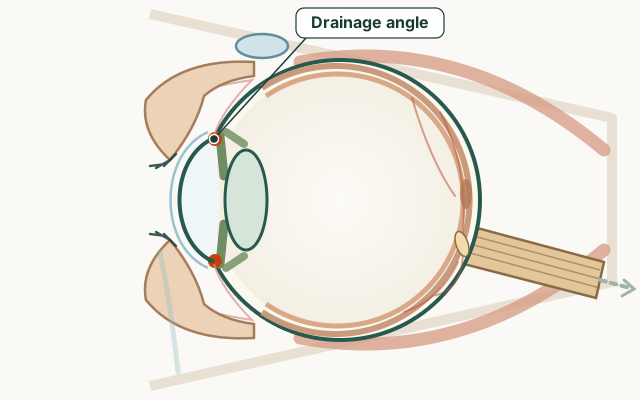
- Part of the eye
- Drainage angle
- Treatment options
- Condition group
- Glaucoma
- Medical code (ICD-10)
H40.0
What is ocular hypertension?
Ocular hypertension means the pressure inside the eye is above the normal range, but unlike glaucoma there is no detectable damage to the optic nerve and no vision loss. It is usually found during a routine eye test.
Symptoms of ocular hypertension
Ocular hypertension has no symptoms, which is why regular eye tests matter. It does not cause pain, redness or blurred vision, and is detected only by measuring the eye pressure and checking the optic nerve.
What causes ocular hypertension, and who is at risk?
It happens when fluid does not drain from the eye as efficiently as it should. Risk is higher with increasing age, a family history of glaucoma, and in some ethnic groups. Raised pressure is the main treatable risk factor for developing glaucoma.
Monitoring and treatment
Many people with ocular hypertension are simply monitored with regular checks of eye pressure, the optic nerve, and visual fields. If the risk of developing glaucoma is judged high enough, pressure-lowering eye drops may be started to protect the optic nerve.
Treatments & Surgery
Frequently asked questions
Is ocular hypertension the same as glaucoma?
No. Ocular hypertension is raised eye pressure without optic nerve damage or vision loss, while glaucoma involves damage to the optic nerve. Ocular hypertension is a risk factor for developing glaucoma.
Does ocular hypertension need treatment?
Not always. Many people are monitored with regular checks, and pressure-lowering drops are started if the risk of developing glaucoma is considered high enough.
Will ocular hypertension affect my vision?
By definition it does not cause vision loss. The aim of monitoring and any treatment is to prevent it progressing to glaucoma, which can affect sight.
Sources for this information
These references support the information on this page. Follow the linked source for its full context.